Sustainability Culture

Sustainability values and responsible operational activities

BCA is committed to creating a significant positive impact in managing environmental, social, and human rights issues through the implementation of a sustainability culture in collaboration with employees, business partners, customers, and the community.

Fair Operating Practices Human Rights Environment and Climate Change Employment Management Employees Development Program

Fair Operating Practices


BCA is committed to maintaining fair operating practices by complying with laws, regulations, social norms, and codes of ethics. The tangible form of BCA's commitment to compliance with a sustainability culture is carried out through several internal efforts, such as managing intellectual assets effectively, building and maintaining fair relationships, eliminating conflicts of interest with suppliers or other related parties, as well as conducting fair competition by complying with anti-monopoly laws. In addition to internal efforts, BCA has established policies regarding respect for human rights, employment, occupational health and safety, and fair procurement practices to suppliers. BCA's stakeholder’s engagement for its business initiatives and sustainability aspects is carried out through clear cooperation through integrity pacts and compliance with policies that are fair to both parties.

In the supply chain, BCA involves local parties to support economic development in Indonesia. In 2021, BCA gradually carried out human rights due diligence on vendors in the BCA supply chain to ensure that vendors respect human rights principles in their operations. Each prospective vendor will be selected prior to being accepted to cooperate, with the selection process covering the ESG aspects.

Human Rights and Employment


A. Enforcement of Human Rights

BCA is committed to respecting and upholding human rights. Human Rights Policies are implemented by BCA in collaboration with employees, vendors, customers, and the general public. BCA prohibits and will not tolerate any violation of human rights practices, including discrimination, sexual and non-sexual harassment in the workplace.

BCA also provides opportunities for people with physical disabilities (diverse abilities) and respects their rights. Currently, BCA has employed 26 outsourced workers with disabilities who work as Call Center Officers in the Digital Service Center.

BCA is committed to maintaining communication with employees through various means, one of which is Halo SDM (66900), which can be contacted by employees to obtain information about employment or industrial relations. This facility can be accessed via BCA's internal telephone network with a guarantee of confidentiality for callers' information.

The aspect of human rights is one of the fundamental issues that need to be considered in realizing sustainable business. In realizing the commitment as a responsible company for human rights.

In 2022 BCA conducted human rights due diligence on the employment aspect for BCA employees. And in 2023, BCA awarded a certificate of appreciation from the Ministry of Law and Human Rights of the Republic of Indonesia for business actors who have fulfilled the protection, respect and restoration of human rights according to the Business and Human Rights Risk Assessment (PRISMA) indicator standards.

B. Safe and Respectful Workplace

BCA is committed to fostering a healthy, safe, productive, and respectful work environment by rejecting all forms of discrimination, violence, sexual and non-sexual harassment, as well as other negative behaviors.

To support this commitment, BCA has established the Respectful Workplace Policy (RWP), aligned with both national and international human rights and labor standards. This policy complements BCA’s internal Human Rights Policy and applies to all activities involving BCA, whether directly or indirectly. The RWP covers all employees (permanent, contract, outsourced, interns, or trainees), interactions with customers, as well as third parties such as business partners, vendors, and suppliers. Implementation of this policy is the responsibility of all levels of BCA, in line with their respective roles and functions.

As part of strengthening its human rights culture and ensuring a respectful workplace, BCA requires all employees to complete mandatory online training. The training includes human rights awareness, BCA’s commitment to upholding human rights, prohibited behaviors such as discrimination and harassment, and the available reporting mechanisms through both designated work units and the Whistleblowing System.

Environment and Climate Change


BCA has developed a Climate strategy that serves as a key guideline in decarbonizing and increasing resilience to climate change, supporting the government's target to reduce GHG emissions by 31,89% by 2030 and achieve Net Zero Emission (NZE) by 2060. The discussion on sustainable finance, including the management of climate-related risks and ESG, is presented in the form of a quarterly report. BCA also identifies and analyzes the actual and potential impacts of climate-related risks and opportunities on its business, directing business strategy and financial planning with the ultimate goal of supporting the achievement of NZE through the implementation of the Climate Change Strategy Roadmap.

Implementation of Climate Risk Stress Test (CRST)

In 2023, the Indonesian government, through OJK, initiated the initial phase of Climate Risk Stress Testing (CRST) directed at the 11 banks in the Climate Related Financial Risk Task Force, including BCA, to assess and report the impact of climate risk on their loan/investment portfolio. BCA conducted this CRST using a simple approach, simulating physical and climate transition risks, identifying vulnerabilities and mitigation strategies for a short-term period. For physical risks, quantitative analysis was conducted on productive and consumer loans affected by drought, forest fires, and floods in 2023. Meanwhile, transition risk was measured for the period 2023-2025, covering the market risk of corporate bond holdings and its effect on corporate credit. Qualitative methods were used to assess transition and physical risks against operational risks, and for long-term risks (2030, 2040, 2050) using the NGFS scenario. The results show that BCA is still adequately capitalized above the CAR required by OJK, and the bank is committed to developing a framework in accordance with OJK's roadmap.

Climate Change

1. BCA's Response to Climate Change

BCA has developed a climate change strategy roadmap to identify the bank's risks and opportunities posed by climate change. BCA has taken the following steps:

  • Develop a Climate Change Strategy roadmap;
  • Continue to develop a GHG inventory using the GHG Protocol Standard;
  • Improved the understanding of climate change sources and impacts on its operations and investments;
  • Increase the Bank's resilience to emissions and climate risk by monitoring climate-related investment sectors;
  • Prepare guidelines for customers and businesses to shift to a low-carbon and climate-resilient economy.

2. Agent of Change

The eco-friendly movement at the BCA office cannot be separated from the involvement of BCA employees. BCA has established Agent of Change (AOC) in representative offices/work units at the head office, regional offices, branch offices throughout Indonesia and also subsidiaries.

Agent of Change plays a role in implementing environmentally friendly culture and behavior in the office, such as saving electricity and water, sorting waste, developing e-learning green office & green lifestyle e-learning as a means of environmental awareness, and calling for an environmentally friendly movement through internal communication media and the company’s social media.

3.Green Office and Green Lifestyle

In support of environmental conservation and climate change mitigation, BCA has begun to manage energy consumption. BCA's Green office and Lifestyle initiatives include:

  • setting a schedule to gradually turn off the elevator
  • turning off lights during lunch hours for back office areas
  • using inverter air conditioners and LED lights
  • switching the use of 80gsm HVS paper to 75gsm
  • reducing electrical energy consumption, by using LED lights, setting operational schedules for air conditioners, lights, elevators, computers, and other electronic devices;
  • replacing air conditioners with more environmentally friendly ones;
  • utilizing renewable energy by installing solar panels in the office building;
  • implementing recyclable waste management through collaboration with waste banks in the vicinity of BCA buildings to encourage a circular economy in the surrounding area;
  • use of high efficiency water cooled chillers at Wisma BCA Foresta;
  • the use of portable tap water in some buildings to reduce the use of bottled water;
  • providing Public Electric Vehicle Charging Stations (SPKLU) in several BCA buildings;
  • reuse of domestic wastewater from the sewage treatment plant (STP) and rain harvest tanks in several BCA buildings to reduce water consumption;
  • actively managing energy consumption such as electricity, water, refrigerant and fuel in BCA buildings through preventive and corrective maintenance.

4. Environment and Biodiversity Preservation

BCA contributes to supporting Indonesia’s flora and fauna conservation efforts, even though its business activities are not directly related to natural resources or biodiversity. This biodiversity conservation is very important in helping the environmental ecosystems and reducing emissions.

BCA's commitment and efforts to support environmental sustainability in daily banking activities will continue to be improved and carried out on an ongoing basis. None of BCA's activities directly utilize natural resources or damage the environment. Therefore, to date, no environmental complaints concerning BCA’s banking activities have been received.

Environmental Friendly Operations

BCA is continuously developing innovations to achieve environmentally friendly operations. Various efforts have been implemented to reduce negative impacts on the environment, including:

  • Paper usage reduction program
  • Energy efficiency program
  • Reduction of air travel emissions by switching to virtual meetings
  • Gradually implementing green procurement by integrating green procurement guidelines and GHG reduction aspects to create climate resilience
  • Improving the quality of products and services provided to facilitate customer access through digital banking
  • Implementing a digital workplace
  • Supporting environmentally friendly operations through green building concepts
  • Environment-based Bakti BCA program

Employment Management


Collective Labor Agreement (CLA) and Industrial Relations

The Collective Labor Agreement (CLA) is the result of negotiations between the Company's Management and the Labor Union which contains working conditions, rights and obligations regarding the Company and employees. The CLA is valid for a maximum of 2 years since it is signed by the Company and the Labor Union, therefore it is necessary to deliberate for CLA renewal every 2 years. The existence of the Labor Union proves that BCA management supports the freedom of association, the rights to assemble, and to express opinions. Labor Unions not only serve as the negotiation team for the CLA, but also as a worker’s representatives to convey their aspirations regarding industrial relations and other working conditions. BCA has seven labor unions. Based on the results of the verification of Labor Union membership, one of which has more than 10% members of the total employees, namely KOMNAS SP NIBA BCA.

Remuneration and Benefits

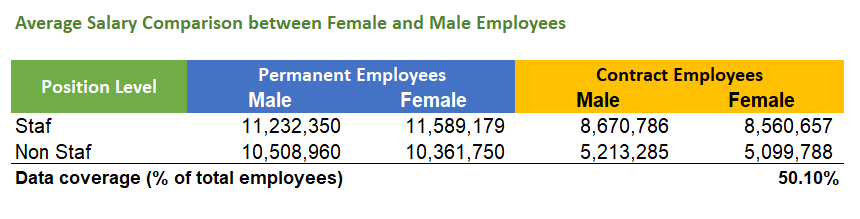
The remuneration received by BCA employees is determined based on position level and performance achievement, without discriminating against gender, ethnicity, race, religion, or class. BCA provides remuneration by always ensuring adequate wages by complying above minimum wage requirements that apply all over Indonesia. The remuneration comprises salaries, allowances, cash bonuses, and extra bonuses in the form of BCA shares, to increase employees’ sense of ownership of the company.

Gender Equality

BCA manages its manpower by upholding the principles of diversity and equal opportunity without discrimination against gender, ethnicity, religion, race, or class. It is supported by the non-discrimination policy stated in BCA Decree No. 214/SK/DIR/2021 on Human Rights Policy, BCA Code of Ethics, and CLA. BCA also continues to increase the role of women in leadership roles. The corporate governance structure represents diversity in terms of gender, education, experience, age, and expertise. BCA promotes gender equality and encourages the role of women in Senior Manager and Director positions to maintain inclusivity.

BCA periodically monitor the gender pay gap to ensure equal remuneration for men and women.
Annual Leaves

All employees has the right to annual leave while still receiving wages/salary and being eligible for other employment facilities and social protection. The period of annual leaves for employees is accordance with the provisions of the Collective Labor Agreement (PKB) based on the length of service at BCA with a length of 12 to 21 working days in one year.

Access to Health Facilities and Consultation

BCA recognizes the importance of health to employee productivity, and has made efforts to provide a safe and decent workplace. In addition to complying with public program to provide BPJS Health facilities, BCA also provides healthcare facilities beyond the public program, such as additional health insurance, counseling services with psychologists and health education. These facilities are managed by the Human Capital Management (HCM) Division. All employees and their families entitled to health benefits such as inpatient care, outpatient care, maternity benefits, eyeglasses, dental care, laboratory tests, periodic medical check-ups, and pap smears.

OHS Communication and Training

BCA's efforts to raise employees' awareness of OHS include facilitating all employees with OHS e-learning media, organizing online OHS dissemination and offline safety and health training for the Emergency Response Team and First Aid Officers to ensure all employees understand OHS procedures to be able to identify and address potential hazards independently. Every year, BCA actively promotes a healthy lifestyle, including mental health. The Bank also encourages employees to maintain a healthy lifestyle by joining various health programs managed by BAKORSENI. In 2024, we organized various health education activities for employees, including topics on lung health, eyes, back pain, cancer, stress management, socializing healthy eating guidelines and mental health in the workplace.

Fair Recruitment

BCA talent management covers all stages from recruitment to the end of an employee’s service terms. Talent acquisition is conducted through several programs, including the Business and Banking Education Program (PPBP), Informatics Engineering Education Program (PPTI), Management Trainee, and other recruitment programs (website: https://karir.bca.co.id/). This approach aims to shape employees from entry-level to leadership level in the company. Recruitment is based on position needs and the compatibility of candidates with BCA’s cultural values. During 2024, BCA recruited 805 men and 1,164 women through a fair, transparent, and non-discriminatory recruitment process.
Employees Development Program


We believe that human resources are our most valuable asset and the main pillar of long-term success. Our commitment to employee development is not merely an operational function, but the core of our business strategy to create sustainable value for all stakeholders. With our “Grow-from-Within” philosophy, we invest significantly in creating a work environment that supports growth, innovation, and leadership at every level.

Our structured approach, based on the 70:20:10 learning framework, ensures that employee development is holistic, encompassing learning through experience (70%), social interaction and mentoring (20%), and formal training (10%). This strategy is designed not only to enhance individual capabilities, but also to strengthen organizational resilience and drive superior business performance.

We instill a culture of continuous learning through integrated methods, ensuring that every employee receives the support they need at every stage of their career.

Personalized Guidance through Coaching and Mentorship

Personalized guidance is the foundation of employee development at BCA. We implement it systematically at every level:

  • For New Employees: Through the First Learning Year (FLY) and Trainee Programs, new employees are accompanied by buddies for operational adaptation and mentors for technical and personal competency development. Their adaptation and performance are also monitored through the Journey and Experience Tracking System (JETS).
  • For Current Employees: Formal coaching sessions with direct supervisors are held twice a year to evaluate performance, identify development needs, and assign special projects aimed at improving capabilities.
  • For Future Leaders: In the career development program, each participant is guided by a mentor to align their innovation projects with business objectives and accompanied by a direct supervisor to map out their career path through an Individual Development Plan (IDP).
  • For Digital Upskilling: Through the Digital Buddy Program, we implement reverse mentoring, where digitally savvy employees mentor their colleagues to improve technology literacy and adoption.

Teams and Networks

BCA fosters a culture of collaboration through team-based learning and internal knowledge-sharing networks. As “Teamwork” is one of BCA’s core values, employees are encouraged to learn from one another through communities, cross-unit projects, and peer-based initiatives that support continuous development and interdepartmental synergy.

  1. Community of Practice (CoP) and BCA Innovation Convention (BIC)
    A community of practitioners who share a common interest in a particular subject and a sustained desire to enhance their knowledge and expertise through continuous interaction with one another in the work unit. Not only limited to work units but also across work units (called Online CoP Series). This CoP fosters a culture of sharing and collaboration, which sparks ideas for improvement and innovation among employees. To build and strengthen this culture of innovation, BCA has held an employee innovation competition called the BCA Innovation Convention annually since 2014. In this competition, employees can collaborate with employees from other work units by submitting their improvement and innovation ideas to further improve BCA.
  1. Project-Based Learning Networks
    To develop digital transition programs, we also closely collaborate with the expertise from other units such as:
    • Collaborate with Operation Strategy & Development Division to define Automation Program using Microsoft Power Automate
    • Collaborate with Data Management Team to create Machine Learning, and AI tools (e.g., LISA, EDITH)
    These initiatives foster team-based innovation and measurable business impact through the implementation of cross-functional projects.
  1. Membership in internal/external organization
    As part of its commitment to continuous improvement and excellence, BCA actively participates in various internal and external organizations related to learning and development. BCA is a member of several research and advisory institutions such as Gartner, Harvard Business Review, and Deloitte, which provide valuable insights into business, leadership, and organizational best practices.

    To strengthen and update competencies in finance, banking, and technology, BCA also partners with global learning platforms such as Skillsoft, Coursera, Microsoft Learn, and Udemy. These partnerships support the company's efforts to remain at the forefront of industry knowledge and employee upskilling.

Employee Development Program

Employees' readiness to adapt to sustainability trends and the business dynamics of the banking industry is a material topic that needs to be managed. Therefore, BCA is committed to improving human capital's capability, while upholding the company's values and culture. BCA has develop various employees development program includes:

  1. Leadership Development Program
    The Career Development Program is a tangible manifestation of the “Grow-from-Within” philosophy. This program is designed in stages (from Echelon 7 to Echelon 1) to prepare internal leadership successors.

    To embed leadership culture, BCA implements the LEADER+ initiative, which instills 10 core leadership traits to be demonstrated by all leaders, and GEMBA (Management Goes Down Movement), ensure a strong leadership culture and deep interaction between management and teams throughout the organization.

  1. Cultural Education Program
    As an entity with thousands of branch offices throughout Indonesia, we equip our employees, with a deep understanding of company culture through experience-based briefings and customized orientations. The goal is to foster adaptability, empathy, and effective communication, enabling employees to build strong relationships with internal & external stakeholders. Cultural education at BCA goes beyond understanding diversity, it reinforces unity through shared values while honoring local uniqueness.
  1. Transition Program for Retiring Employees
    We value our employees' contributions until the end of their service. Our retirement preparation program includes:
    • Ring the Bell (Age 50): Mental preparation and planning sessions for the last five years of employment.
    • Beautiful Life (Age 54): A comprehensive program for employees and their spouses that includes health training, financial planning, and entrepreneurial skills. These experiences are expected to give the employees some inspiration for their next journey.
    • Post-Retirement Opportunities: We keep the door open for retirees who want to continue contributing, whether as mentors, company representatives, or expert staff.
  1. Digital Transition Program: Upskilling for a Digital-First World
    In the last five years, we have already started the digital transformation and upskill the employees with several tech-related training programs. Thus, to further nurturing the digital transition initiatives, we continuously produce several training programs that are currently more focused in embracing high-end technology, innovative thinking methods, and agile working culture. Our digital transformation programs such as:
    • Data Analytics to build an internal data scientist in each unit
    • Low Code Programming to boost innovation and empowering employees to become citizen developers to build automation (RPA) projects.
    • Machine Learning & AI: Training to build predictive models using our internal platforms, LISA and EDITH.
    • Digital Buddy Program: A reverse mentoring initiative to accelerate inclusive digital adoption across the organization.

The Quantitative Business Impact of Employee Development

Our investment in employee development has a tangible and measurable impact on both operational performance and business sustainability.

Program/Indicator Quantitative Impact

Leadership Development

  • BCA’s Leadership & Career Development Program is designed to ensure leadership continuity through a structured, Grow-from-Within approach. Between 2024 and Q1 2025, over 60 learning batches reached approximately 2,406 employees, with a completion rate above 99%.
  • 97.8% of leadership positions filled internally (2024).
  • 2,406 innovation projects initiated by program participants (2024-Q1 2025).
  • Customer Engagement Score of 4.77/5.00 (2024), reflecting leadership focused on excellent service.

Digital Transition

  • Automation OCR Service successfully gained 52.3 million hits and impacted with 97% times efficiency in online account opening.
  • IDR816.13 billion in revenue generated from targeted marketing campaigns using AI.
  • Suspicious Transaction Detection System using AI decrease 57% in fraudulent transactions.
  • EDC Software Automation improves the SLA by 96% for new EDC package for merchant BCA and reducing the risk of human error as well
  • Automation for debtor reminder system can improve time efficiency by 95% and reducing the risk of payment overdue

Cultural Education

  • Team Engagement Score of 4.68/5.00 (2024), above the global benchmark (4.50).

Overall Business Impact

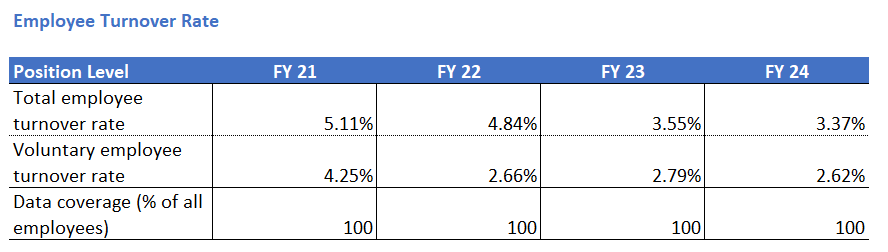
  • Retention Rate: 68% of employees have been with the company for >5 years, with turnover decreasing from 4.86% (2022) to 3.4% (2024)
  • Net Profit: 54.8 trillion Rupiah (2024), supported by a high-performing and resilient workforce.

Inclusive Development

Our commitment to development extends to the entire workforce, including contract and part-time employees. Although tiered career development and retirement preparation programs are exclusively for permanent employees, we ensure that contract employees, such as participants in the Magang Bakti Program, have access to various development initiatives.

Magang Bakti participants receive in-depth orientation on BCA's corporate culture and core values. They are also included in digital literacy programs such as Digital Buddy and have full access to the Community of Practice, where they can learn and collaborate with permanent employees. In addition, we provide a clear path for high-performing participants to become permanent employees, based on organizational needs and position availability.

Dapatkan Info Sustainability Terbaru dari BCA

Subscribe