
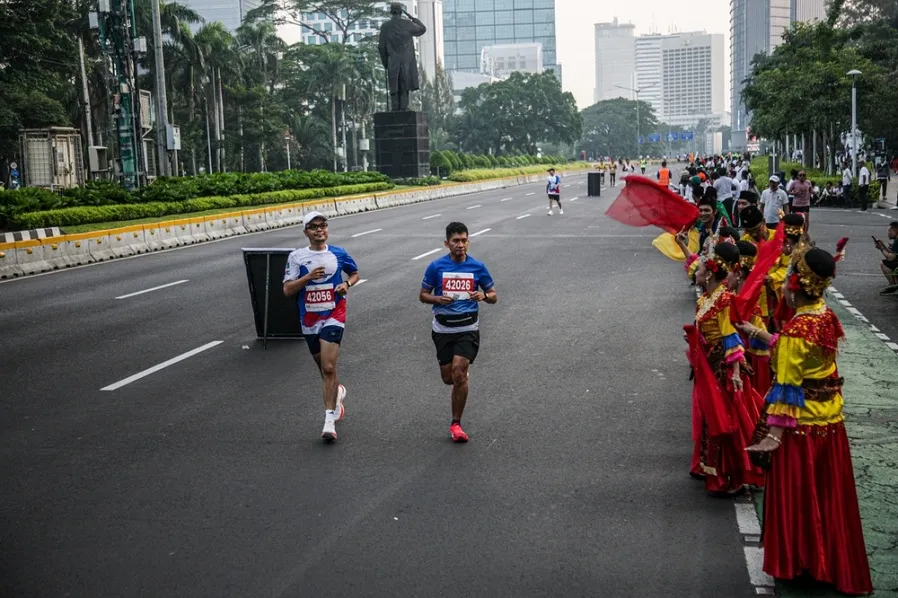
Thousands of runners gather with their race bibs attached, navigating various routes until they reach the finish line.
For some people, a marathon is a challenge that tests physical endurance, training consistency, and the ability to manage energy levels.
But what exactly is a marathon? How far do runners have to go, and what should they prepare to ensure they can make it to the finish line?
Before signing up for a race, let's explore the different race categories, preparations, and marathon techniques you should know.
What Is a Marathon?
A marathon is a long-distance running event covering an official distance of 42.195 kilometers, or approximately 26.2 miles.
This distance requires physical endurance, a structured training program, and strategies for managing pace and energy intake throughout the race.
Unlike casual jogging, marathon running requires a longer preparation period because the body needs to adapt to prolonged physical activity.
Runners also need to understand their physical limits to complete the race more safely.
Also Read: 7 Jogging Tracks in Jakarta to Train for the Jakarta Running Festival 2026
Types of Running Races by Distance
The term marathon is often used to refer to running races in general.
However, race organizers typically offer several categories based on distance, allowing participants to choose an event that matches their experience and fitness level.
In general, running races can be categorized by distance as follows.
1. 5K Run
The 5K category covers a distance of five kilometers and is suitable for beginners who want to try their first running event.
The relatively short distance provides an opportunity to experience the atmosphere of a race, learn to manage pace, and build a consistent running habit.
2. 10K Run
Covering a distance of ten kilometers, this category is suitable for runners who are already comfortable running and want to improve their endurance.
Regular training is still essential, including building stamina and maintaining a steady pace to avoid running out of energy before reaching the finish line.
3. Half Marathon
A half marathon covers approximately 21.1 kilometers, or half the distance of a full marathon.
This category requires more serious preparation, particularly in terms of endurance, hydration, and pacing strategies. Runners should establish a consistent training foundation before attempting this distance.
4. Full Marathon
A full marathon covers the official marathon distance of 42.195 kilometers.
This category requires a gradual training program spanning several months, along with proper nutrition and recovery management.
Given the distance, runners need to learn how to maintain a sustainable pace from the start so they still have enough energy for the final kilometers.
5. Ultramarathon
An ultramarathon is a running event covering a distance greater than 42.195 kilometers.
Some races span tens or even hundreds of kilometers, and certain events take place on trail terrain.
This category is generally intended for experienced runners who are accustomed to long-distance training and can manage their energy requirements and recovery needs more effectively.
Also Read: Support Your Running Hobby with Proper Financial Planning
Proper Marathon Techniques to Help You Go the Distance
In addition to physical preparation, proper running techniques can help you manage your energy throughout the race.
There is no single technique that works for everyone, but the following tips can help you maintain efficient and comfortable running movements.
1. Maintain Proper Body Posture
Keep your body naturally upright, relax your shoulders, and look ahead. Bend your elbows comfortably and swing your arms in coordination with your leg movements.
Avoid excessive tension in your body, as it can make running feel more exhausting.
2. Manage Your Stride and Foot Strike
Use a comfortable stride that is not excessively long. Try to land your feet close to your body's center of mass without forcing yourself into a particular foot-strike pattern.
Consistent training will help you find a natural stride rhythm that works for you.
3. Control Your Breathing and Pace
Maintain a steady breathing rhythm and start the race at a controlled pace. Avoid following other runners if their speed feels too fast for you.
Runners who start too aggressively risk running out of energy before reaching the finish line.
4. Stay Hydrated and Know Your Limits
Use hydration stations as needed, taking into account the weather and your body's requirements. If you experience dizziness, sharp pain, or unusual shortness of breath, slow down or stop and seek assistance from medical personnel.
If needed, you can consume energy gels or other energy supplements during the marathon.
Ideally, plan your energy intake before the race begins, during the race, and toward the final kilometers to help maintain your energy levels and focus. For example, you may consider taking an energy gel 10–15 minutes before the start and at intervals of approximately 30–45 minutes during the race, depending on your needs, product instructions, and prior training experience.
Completing the race is never more important than your safety.
Also Read: How to Start Investing in Stocks for Beginners Through myBCA
Get Ready for the Jakarta Running Festival 2026
A marathon is not just about running 42.195 kilometers. It is also about preparation, consistency, and understanding your body's limits.
Start with a distance that suits your current fitness level, gradually increase your training, and set realistic goals.
Coming soon, the Jakarta Running Festival (JRF) 2026 will take place from October 22–25, 2026, at the Gelora Bung Karno (GBK) Sports Complex in Jakarta. BCA is supporting the event as its Official Bank Partner.
Come and be part of the excitement at JRF 2026! Find out more on the official BCA website.


